Growth mindset · Self-doubt
Self-Doubt Examples: 12 Common Ones and What They Really Mean
Self-doubt usually shows up as a short sentence that sounds like a fact: "I'm not ready," "Who am I to do this?", "They'll find out I don't belong." Each one is a belief you picked up somewhere, not a verdict about you. Below are 12 of the most common self-doubt examples, what each one is really saying, and one question you can use to answer it.
When I was walking into rooms full of people with degrees I didn't have, my doubt never said "you feel insecure." It said something much more specific and much more convincing. Once I started writing those sentences down, I noticed they were the same handful, over and over. Most people I work with find the same thing.
Read through the list and notice which ones you recognize. The one that makes you wince a little is usually the one worth working on first.
12 self-doubt examples
1. "I'm not ready yet."
What it's really saying: "I can't move until I feel certain." Readiness is a feeling that usually shows up after you start, not before.
Ask: What is the smallest version of this I could do this week?
2. "Who am I to do this?"
What it's really saying: "People like me don't get to do things like this." That rule was handed to you. It wasn't proven.
Ask: Who decided who gets to do this, and why am I still following their rule?
3. "They'll find out I don't belong here."
What it's really saying: "My place here was a mistake." This is the classic sign of imposter syndrome, and it tends to get louder right after you've earned something.
Ask: What did I actually do to get here?
4. "Everyone else is better at this than me."
What it's really saying: "I'm comparing my inside to their outside." You see your own doubts in full and only other people's finished results.
Ask: Am I comparing myself to where they are now, or to where they were when they started?
5. "I'm too old (or too young) to start."
What it's really saying: "There was a deadline, and I missed it." There almost never was one.
Ask: Where will I be in a year if I start now, compared with if I don't?
6. "I'll just make a fool of myself."
What it's really saying: "Being seen trying is more dangerous than not trying." That belief usually comes from a moment, often in school, when trying in public cost you something.
Ask: What is the worst realistic outcome, and could I live with it?
7. "I always mess things up."
What it's really saying: "A few past mistakes define me." "Always" is doing a lot of work in that sentence.
Ask: Can I name three times I didn't mess it up?
8. "I need more qualifications first."
What it's really saying: "Permission comes from a certificate." Sometimes you do need training. Often it's a way of staying busy without taking the risk.
Ask: Is this course or credential required, or is it a place to hide?
9. "That worked out, but it was just luck."
What it's really saying: "My wins don't count." If your good results never count as evidence, your doubt never has to change.
Ask: What did I do that made the luck useful?
10. "I'm not smart enough for this."
What it's really saying: "Ability is fixed, and I already know my limit." That's the opposite of a growth mindset, and it's one of the most common limiting beliefs there is.
Ask: What would I need to learn, and how long would that actually take?
11. "People like me don't make that kind of money."
What it's really saying: "Money has a ceiling, and I know where mine is." Self-doubt often shows up first around money. I cover this one in depth in limiting beliefs about money.
Ask: Where did I first learn what "people like me" earn?
12. "What if I fail?"
What it's really saying: "Failing would prove the doubt right." In practice, a failed attempt usually teaches you more than a skipped one.
Ask: What would I learn even if this doesn't work?
What these examples have in common
Look at the list again. Almost none of these sentences are about the task in front of you. They're about who you're allowed to be. That's because self-doubt is usually borrowed: you picked it up from family, school or the people around you, long before you could argue with it.
In my book I call this the Pinocchio Effect. Like Pinocchio, you were handed a set of truths by people you had no reason to doubt, and some of them don't hold up once you're out in the world. When a doubt like the ones above shows up, it isn't proof that you're out of your depth. It's a sign that you've moved past an old belief and your picture of yourself hasn't caught up yet.
How to use this list
- Pick one. Choose the example you hear most often in your own head.
- Write your version. Put it in your own exact words. Specific beats general.
- Answer the question. Use the question under that example, in writing.
- Take one small action. Do one thing today that the doubt says you can't.
For the full method, read my guide on how to overcome self-doubt in 5 steps.
Questions people ask
What is an example of self-doubt?
A common example is the thought "I'm not ready yet" right before you apply for a job, launch something or speak up in a meeting. Self-doubt usually shows up as a short, specific sentence like that, not as a general feeling.
What are the signs of self-doubt?
Common signs are putting things off until you feel "ready," brushing off your wins as luck, comparing yourself to people further along, needing reassurance before you act, and turning down opportunities you're qualified for.
Is self-doubt normal?
Yes. Almost everyone has it, especially when they try something new. It becomes a problem when it starts making your decisions for you.
Related reading
How to Stop Self-Doubt: 5 Steps That Work. The step-by-step method for quieting a doubt and acting anyway.
How to Overcome Imposter Syndrome: 5 Steps That Work. When you already have the seat but feel like a fraud in it.
30-Day Growth Mindset Challenge. One short exercise a day to build the habit.
The Pinocchio Effect: Why You Believe What You Were Taught. Where your beliefs came from, and four questions to check one you never chose.
Free · About 8 minutes
Find the belief behind your self-doubt
The free OS Scan finds the one limiting belief that's costing you the most right now, and gives you a personal plan to rewrite it.
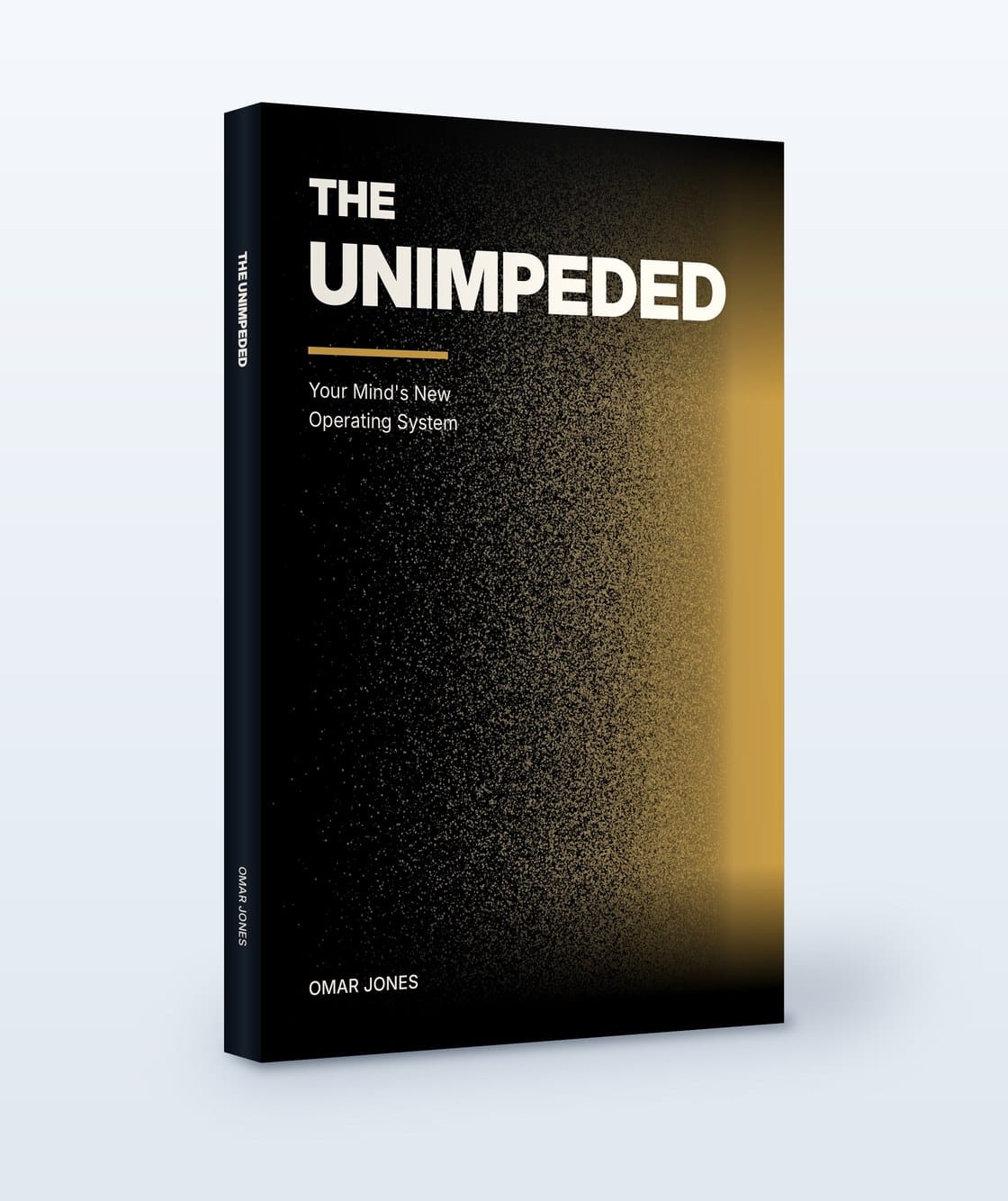
This guide draws on my book The Unimpeded: Your Mind's New Operating System, out now in paperback and hardcover. My first book, Mindset Alchemy, covers the daily practices of a growth mindset.
Rather work on it with me? The Unimpeded program adds live sessions, a small crew and a private 1:1 with me every week. See the program