Growth mindset · Limiting beliefs
How to Change a Limiting Belief: A 5-Step Method
A limiting belief is something you were told so early, by someone you trusted so much, that it now feels like a fact. You change it by finding where it came from, testing it against the life you want, and replacing it with something you choose. This guide shows you how, in five steps.
I left high school at fifteen, in Englewood on Chicago's South Side, over a disagreement that lasted about two minutes. For thirty years I thought that story was about the counselor who stopped me at my locker. It wasn't. It was about a belief I didn't know I was carrying, and it cost me my education.
If you keep landing in the same place, the same job, the same argument, the same ceiling, you are probably running a belief like that too. Here is how to find it and change it.
What is a limiting belief?
A limiting belief is an idea about yourself or the world that narrows what you think is possible. “People like me don't get hired there.” “You have to choose between money and meaning.” “Asking for help is weakness.” It doesn't feel like a belief. It feels like the way things are.
Where limiting beliefs come from
Try this. Picture five babies alone on an island, with nobody to teach them anything. What language do they speak? What do they believe about money, about work, about who deserves what?
You can't answer, because none of it grows inside a person. Somebody has to put it there. Every belief you hold arrived from someone: a parent, a teacher, a neighborhood, a first boss.
I call this the Pinocchio Effect. Pinocchio learned everything from one man. When the strings came off and he walked into the world, his nose started growing. He wasn't lying on purpose. He was repeating what he'd been given, and finding out in public that some of it didn't hold.
That's all of us. And before you look for someone to blame, ask where Geppetto got his information. He was somebody's boy too. Nobody in the chain was trying to limit you. They passed on what they had.
When a belief stops matching reality, the growing nose isn't a verdict on you. It's a notification that something needs an update.
How to spot a limiting belief
The clearest sign is a menu that's too short. When something goes wrong, your mind offers two choices, and both cost you.
At fifteen I got to school an hour early, determined to start going to class. At 7:58 a counselor told me I couldn't be at my locker until eight. It escalated, security walked me to her office, and my mother came in and asked what I wanted to do. My menu had two items: comply or leave. I left, and I never went back.
A year later, a manager at White Castle told me to clean a bathroom he'd refused to clean himself, or go home. I went home. He yelled that I'd never work in this town again, and I believed him for three days. Then Lena, a general manager one level above him, called and said one sentence: “Omar, Brian doesn't have that kind of power.”
Lena was the third option. She'd been there the whole time. I never went looking, because the place I learned to think didn't have an “over.” There was the person in front of you and the door behind you.
Other signs you're running an old program:
- The same result keeps showing up in different jobs, relationships or cities.
- You can name the rule but not who taught it to you.
- The belief comes with a feeling, not evidence. It's urgent, certain and a little ashamed.
- People you respect live by a different rule and it works for them.
- You're right about the situation and still lose. I read both the counselor and Brian correctly. The problem was the only tool I'd been issued.
How to change a limiting belief in 5 steps
- Name it in one sentence. Write the rule down exactly as it sounds in your head: “If someone above me says no, it's over.” A belief you can read is a belief you can examine.
- Find out who told you. Not whether it's true. Where it came from. Trace it to a person: a parent, a teacher, a block, a boss. Most limiting beliefs are hand-me-downs, already worn by somebody else before they reached you.
- Ask whether that person is living the life you want. This is the question that does the work. Usually the answer is no, and usually they were doing their best with what they were handed. You can respect them and still stop running their software.
- Find your third option. The next time you're sure you have two choices, assume you're wrong and go look for the one you can't see. There is almost always a Lena: someone one level up, one call away, who knows the rule isn't real.
- Act on the new belief and choose your inputs. You don't think your way into a new belief. You act like the person who already holds it, badly at first, until the acting stops being acting. Feed it on purpose: the books, conversations and people you take information from decide what gets installed next.
The 90-second version
When an old belief fires in the moment, run steps 2 and 3 as two questions:
- Where did this belief come from?
- Is the person who gave it to me living the life I want?
It takes about ninety seconds. I've done it in parking lots, in bathrooms before meetings, and in the back of a car on the way to speak at a conference. It doesn't make the feeling disappear. It demotes it from a verdict to a notification.
Be patient with step 5. I could see my own change working by year three. It was year ten before I stopped being able to feel the seams. If you're two years in and don't feel finished, you're not behind. You're on schedule.
Common limiting beliefs, and what to try instead
These are the four patterns I see most, in my own life and in the people I coach.
| The belief | Where it often comes from | The rewrite |
|---|---|---|
| “I only have two options: take it or walk.” | Places where appeals went nowhere and the person in front of you had the last word | “There's a third option I haven't found yet. Who's one level up?” |
| “I figure things out alone.” | Growing up where asking for help cost you something | “My network is my inventory of options. Who has done this before?” |
| “I'm good at starting.” | Being praised for bursts of effort, not for finishing | “Anyone can start. I'll judge myself by the afternoon, not the morning.” |
| “Success looks like what everyone around me wants.” | The goal your family, block or industry agreed on | “Who told me that's where I'm supposed to go? Is it mine?” |
The last one caught me. Where I grew up, everybody wanted the same thing: a car with rims. I bought mine working at White Castle and was proud I took a different road. It took me thirty years to notice I never once asked why I wanted the car. Different road, same parking space.
Questions people ask
Can you really change a limiting belief?
Yes. A belief was installed, so it can be replaced. You won't argue it away in one sitting, though. You change it by acting on a new one until that becomes the default.
How long does it take?
The 90-second questions work the first time you use them. A lasting change takes longer. For me it showed by year three and settled by year ten.
Is a limiting belief the same as a fixed mindset?
They're related. A fixed mindset is the habit of treating your abilities as set. Limiting beliefs are the specific rules that habit runs on. A growth mindset asks “how can I” instead of “why can't I.” Changing a limiting belief is how you put that question to work.
Is this a replacement for therapy?
No. This is a coaching approach for everyday patterns. If a belief is tied to trauma or is affecting your mental health, talk to a licensed professional.
Related reading
Limiting Beliefs About Money: How to Spot and Rewrite Them. See this method applied to money: seven common money beliefs, where they come from and four exercises to rewrite them.
Growth Mindset Exercises for Adults: 10 That Actually Stick. Ten small daily exercises to keep a new belief running past lunch.
The Pinocchio Effect: Why You Believe What You Were Taught. Where your beliefs came from, and four questions to check one you never chose.
Free · About 8 minutes
Find the one costing you the most
The free OS Scan finds the one limiting belief that's costing you the most right now, and gives you a personal plan to rewrite it.
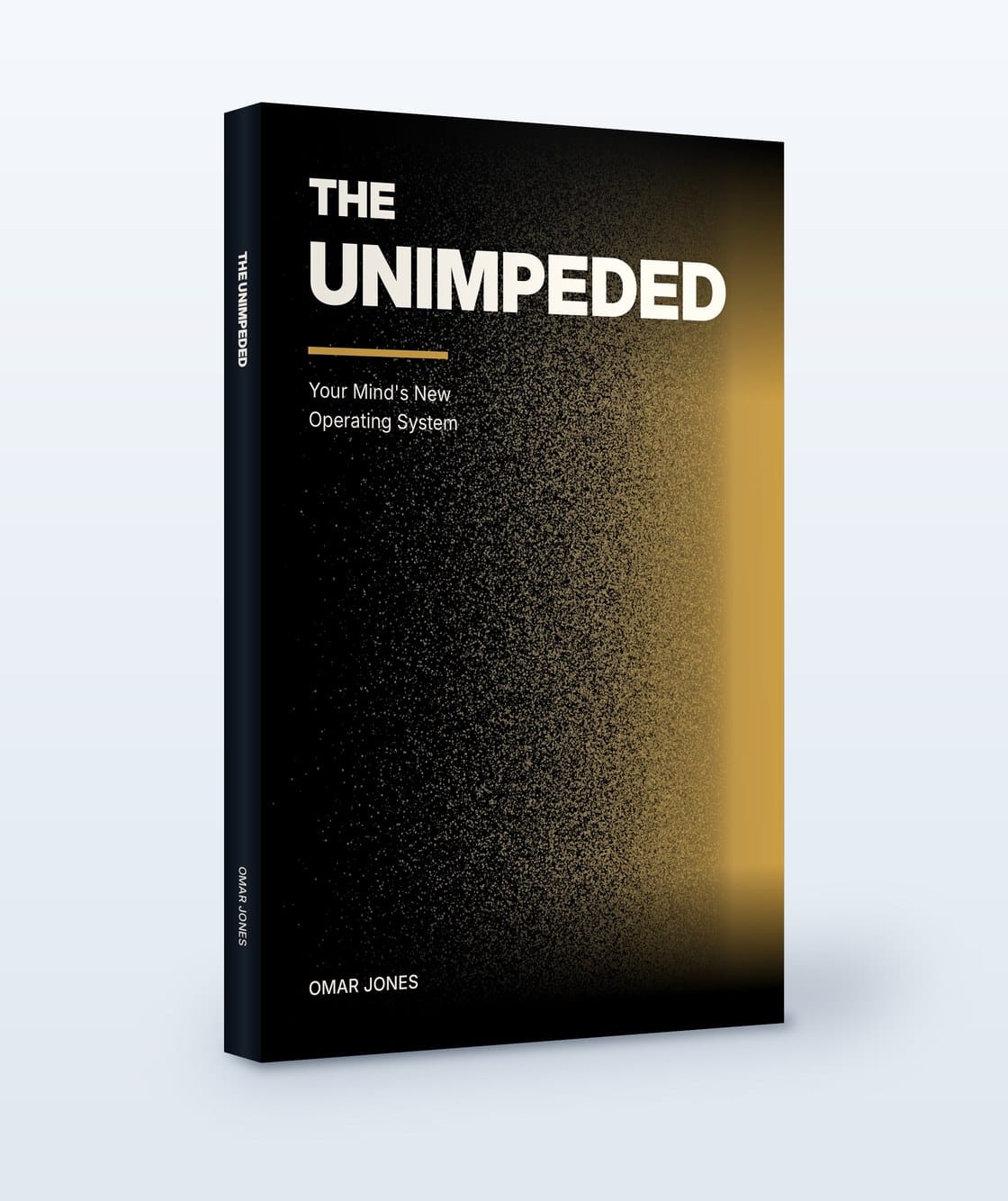
Want the whole method? It's in my new book, The Unimpeded: Your Mind's New Operating System, out now in paperback and hardcover. Get the book on Amazon
Rather do it with me? The Unimpeded is a 28-day program with live sessions, a small crew and a private 1:1 with me every week. See the program