Growth mindset · Self-doubt
How to Stop Self-Doubt: 5 Steps That Work
To stop self-doubt, catch the exact sentence your doubt is saying, trace where you first heard it, check it against what you've actually done, and take one small action before the feeling settles. Self-doubt is usually a belief someone else installed, not a fact about you, so you can question it like any other claim.
I left high school at fifteen, in Englewood on Chicago's South Side. Years later I was walking into rooms at LinkedIn, Upwork and Front full of people with Ivy League degrees, and every morning a voice told me I didn't belong there. For a long time I handled it by hiding where I came from and working twice as hard so nobody would ask. It worked, but it was expensive.
What finally changed things wasn't more confidence. It was learning to treat that voice as information instead of a verdict. Here's the method I use now.
How to overcome self-doubt in 5 steps
1. Catch the exact sentence.
Self-doubt rarely shows up as a feeling you can work with. It shows up as a sentence: “I'm not ready,” “Who am I to do this?”, “They'll figure out I don't belong.” Write the sentence down, word for word, the moment you notice it. You can't question something you haven't put into words.
2. Ask where it came from.
Most self-doubt is borrowed. Somebody said it to you, or about you, or showed you what people like you were supposed to expect, usually before you were old enough to argue. Next to your sentence, write who you first heard it from. Then ask one more question: is that person living the life you want? If not, why are you taking their word for what you can do?
3. Check it against the evidence.
Treat the doubt as a claim, not a fact. List what you've already done that it says you can't do: the things you learned, the rooms you got into, the problems you solved. Doubt is loud and vague. Evidence is quiet and specific. Put them side by side.
4. Read it as a timestamp, not a stop sign.
Self-doubt shows up most when you move past what you've already proven: a new job, a bigger room, a first launch. That timing is the point. The feeling isn't evidence that you've overreached. It's evidence that you've arrived somewhere new and your picture of yourself hasn't caught up yet.
5. Take one small action before it settles.
Doubt grows in the gap between deciding and doing. Pick the smallest real step you can take today, send the email, book the call, write the first paragraph, and do it before the feeling has time to talk you out of it. Every step you take while doubting is evidence you can use next time.
Why self-doubt feels so true
Self-doubt doesn't feel like an opinion. It feels like a fact about the world, because it was installed before you could check it. In my book I call this the Pinocchio Effect: like Pinocchio, you were handed a set of truths by people you had no reason to doubt, and some of them don't hold up once you're out in the world. When the gap shows, it isn't a punishment. It's a notification that something in your thinking needs an update.
That's why arguing with the feeling rarely works. Tracing it does. Once you can see where a doubt came from, it stops sounding like your own voice.
Self-doubt examples
Self-doubt is easier to catch once you know what it sounds like. Three of the most common:
- "I'm not ready yet." Waiting to feel certain before you start.
- "Who am I to do this?" A rule about who gets to do what, handed to you by someone else.
- "It was just luck." Refusing to count your wins as evidence.
For the full list, with what each one is really saying and a question to answer it, see 12 self-doubt examples.
A 90-second reset for the moment doubt hits
When the doubt shows up in the middle of the day, before a call, a pitch or a hard conversation, you won't have time for a notebook. Use this instead:
- Name it. Say the sentence to yourself: “That's the ‘I'm not ready’ program.”
- Ask the two questions. Where did this come from? Is that person living the life I want?
- Ask “how can I” instead of “why can't I.” Pick one thing you can do in the next ten minutes, and do it.
What to do when the doubt keeps coming back
If the same doubt returns no matter what you achieve, it's sitting on top of a deeper limiting belief. My guide on how to change a limiting belief walks through finding and rewriting it. If you'd rather build the habit a little each day, try the free 30-day growth mindset challenge.
Questions people ask
What causes self-doubt?
Most self-doubt comes from beliefs you picked up early from family, school and the people around you, long before you could question them. It gets louder when you try something new, because your current picture of yourself was built on what you've already done, not on what you're about to do.
Is self-doubt the same as imposter syndrome?
They overlap. Imposter syndrome is a specific kind of self-doubt: the feeling that you don't belong somewhere you've already earned your place, and that someone will find you out. The same steps help with both. For more, read my guide on how to overcome imposter syndrome.
Can self-doubt ever be useful?
Yes, as a signal. A flash of doubt can tell you to prepare more or ask for help. It becomes a problem when it decides for you, when you stop applying, stop speaking up or quit because of a sentence you never checked.
How long does it take to stop doubting yourself?
You can quiet a single doubt in minutes with the steps above. Changing the belief underneath takes repetition: catching it, questioning it and acting anyway, many times, until the new response is the automatic one. With daily practice, you will usually start to notice yourself responding differently within a few weeks.
Related reading
Self-Doubt Examples: 12 Common Ones and What They Really Mean. Learn to recognize the sentence before it makes the decision.
How to Overcome Imposter Syndrome: 5 Steps That Work. When you already have the seat but feel like a fraud in it.
Limiting Beliefs About Money: How to Spot and Rewrite Them. Self-doubt often shows up first around money. This article covers where money beliefs come from and four exercises to rewrite them.
Growth Mindset Exercises for Adults: 10 That Actually Stick. Ten small daily exercises to keep a new belief running past lunch.
The Pinocchio Effect: Why You Believe What You Were Taught. Where your beliefs came from, and four questions to check one you never chose.
Free · About 8 minutes
Find the belief behind your self-doubt
The free OS Scan finds the one limiting belief that's costing you the most right now, and gives you a personal plan to rewrite it.
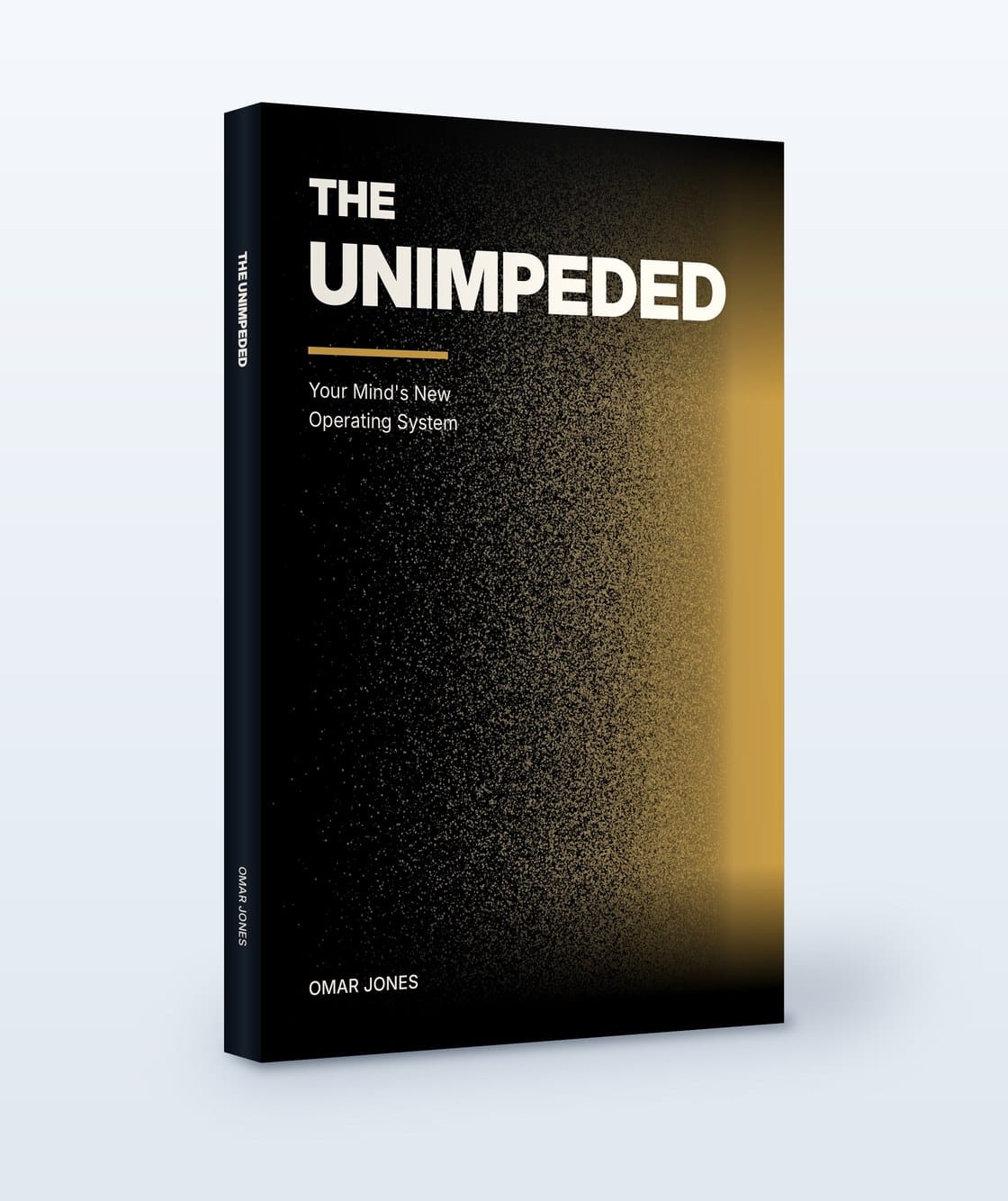
This guide draws on my book The Unimpeded: Your Mind's New Operating System, out now in paperback and hardcover. My first book, Mindset Alchemy, covers the daily practices of a growth mindset.
Rather work on it with me? The Unimpeded program adds live sessions, a small crew and a private 1:1 with me every week. See the program