Growth Mindset · Money Mindset
Limiting Beliefs About Money: How to Spot and Rewrite Them
A limiting belief about money is a sentence about money you accepted as true without ever checking it, like "I can't afford that" or "people like me don't get rich." To rewrite one, catch the exact words, trace who taught them to you, and replace them with a sentence you could defend. Most money beliefs were installed before you earned your first dollar, so you can question them like any other claim.
When I was a kid, I thought wealth meant fish tanks.
I'm serious. If a family had a fish tank in their living room, I assumed they were rich. That was my entire picture of what having money looked like, because it was the most expensive unnecessary thing I had ever seen inside a home. Nobody sat me down and taught me that. Somebody gave it to me anyway. I didn't come up with it.
That's how most limiting beliefs about money work. They don't feel like beliefs. They feel like facts about the world, and they run quietly in the background, deciding what you earn, what you spend, what you save, and what you think is even possible for someone like you.
One note before we start: this isn't financial advice. I'm not a financial advisor, and nothing here tells you what to do with your money. It's about the programming underneath your money decisions, which comes before any advice you'll ever get.
What is a limiting belief about money?
A limiting belief about money is a sentence about money that you accepted as true without ever checking it. It usually came from your family, your neighborhood, or the culture around you, and it shapes your financial choices without asking your permission.
"I can't afford that." "Rich people are greedy." "People like me don't build wealth." "Money is how you show people you made it." None of these are laws of nature. They're software somebody installed.
Where money beliefs come from: the Pinocchio Effect
Here's an exercise I use whenever I catch myself running something I didn't choose. Picture five babies on an island with nobody to teach them anything. What do they believe about money? About work? About who deserves what? You can't answer, because none of it grows inside them. Every one of those beliefs has to be put there by somebody.
In my book The Unimpeded, I call this the Pinocchio Effect. Pinocchio learned everything he knew from one man, Geppetto. When the strings came off and he walked into the world, his nose started growing. We usually read that as punishment for lying. I read it differently. The nose is a reading. It shows the gap between what he was taught and what's actually true.
And where did Geppetto get his information? From somebody who got it from somebody else. Nobody in that chain was trying to hold anyone back. That's the Pinocchio Effect: you're running on information you didn't choose, written by people who didn't choose theirs either. So when your money habits keep producing results you don't want, that isn't a verdict on you. It's a notification. Something in there needs an update.
The question isn't "where did my money go?" It's "who told me what money was for?"
The baker and the blacksmith
There's a village in my book with a river running past it. Bella bakes bread. Boris forges tools. Bread feeds people, and tools build their homes, so they trade.
Then one day Bella needs new pans and Boris doesn't need bread. No trade. Neither of them lacked anything of value. Their needs just didn't show up at the same moment. So the village starts using gold coins, and now Bella can buy pans whether Boris wants bread or not.
Here's the part nobody tells. A tool takes Boris far longer to make than a loaf takes Bella. More skill, more heat, more failure. What they were really trading was time. Every coin is a piece of somebody's life they already spent.
Now picture Boris with a pocket full of coins, spending every one of them trying to out-impress the village. A bigger house. A fancier forge. The day he starts performing success instead of building it, his skill stops growing.
That's what a lot of inherited money beliefs are underneath: rules for impressing a village you never chose to live in. So whose village are you spending to impress?
7 common limiting beliefs about money
See which of these sound like the voice in your head. For each one, there's a question to ask it.
- "Money is for showing people you made it." Ask: Who taught me that wealth is something you display? Real wealth is freedom, and freedom is invisible.
- "I can't afford that." Ask: How could I create the resources to afford this? The first sentence is a wall. The second is a question, and questions have answers.
- "There will never be enough." This is a scarcity mindset, and it often shows up as hoarding and overspending in the same person, because both come from the same fear. Ask: What resources do I already have that I'm not using?
- "People like me don't get rich." In my neighborhood, plenty of people believed success belonged to someone else: a different race, a different class, a different zip code. Ask: Is this a fact, or a consensus?
- "Money is just money." It isn't. Every dollar you have is a piece of your life you already spent. Ask: How many hours did this cost me?
- "I need money to get started." Most things start with something more valuable than money: your time and effort, pointed at something that grows. Ask: What could I build with the hours I already have?
- "I'm behind." Behind in what? A race you never entered, against people you wouldn't trade lives with? Ask: Whose finish line am I measuring myself against?
Why these beliefs make sense (and still cost you)
In Englewood I watched people drive luxury cars to run-down homes and spend assistance money on brand-name shoes. From the outside it looks reckless. I don't think it is. When you have very little control over your circumstances, the one thing you can control is how you look. Status is available even when stability isn't. That's a rational response to a world where the long game doesn't seem to be on offer.
But imagine what those same dollars could have become: a certification, a skill, a cushion. The difference was never discipline. It was what people had been shown was possible. So if money is a constant source of stress for you, that isn't a character flaw. It's a sign that one piece of your software was never written. Now it's yours to write.
How to rewrite your limiting beliefs about money: 4 exercises
1. Price it in hours
You wake up wanting coffee and you have no money. The shop owner offers a deal: mow the lawn for an hour, get a coffee. Would you do it? Most people hesitate, and the hesitation is the interesting part. The coffee costs the same either way. The only thing that changed is that the price got quoted in the real currency, which is your time.
Try it on something bigger. A thing you're thinking about buying costs $400. How many hours of your life is that, after tax? Start running that conversion and your spending changes without any willpower, because most of what we buy doesn't survive the question.
2. The five-purchase audit
This takes ten minutes and it's a little uncomfortable. List the last five non-essential things you spent money on. For each one, ask: Did this move me toward the life I actually want, or away from it? Then imagine those dollars pointed at something that matters to you. Don't do the math on a whole year. Just the five. It's enough.
3. Trace it and replace it
Pick one money belief from the list above that hit a little too close. Catch the language: write down the exact sentence you hear in your head, not the polite version. Find who told you: trace it back to the person or place it came from, then ask whether that person is living the financial life you want. Write the replacement: not a slogan, but a sentence you could defend if someone pushed back on it.
I walk through this process in more detail in my free guide, How to Change a Limiting Belief.
4. Describe your ideal Tuesday
Most people keep buying things that don't fit a life they've never actually described. So describe it. What does an ordinary Tuesday look like in the life you want: where you wake up, what you work on, who you spend time with? Then ask how your money, time, and energy could move you toward that specific Tuesday.
From consumer to creator
A small example from my own life. At one point I was due for the newest phone. Everyone had it. Instead, I put the thousand dollars into stocks. A few years later, that position had grown enough that I could buy a phone out of the gains and leave most of the original money invested. I didn't predict anything, and I'm not telling you to buy anything. The number isn't the point. The shift is. I stopped treating money as a prize to turn into objects and started treating it as a tool I could point at the future.
That's the move from consumer to creator. Consumers only spend value. Creators generate it, by building a skill, making something, or starting something other people need. Before any big money decision, I run three filters. Alignment: does this support the life I'm building? Value creation: will this grow into something, or just get used up? Time versus money: in hours of my life, is this trade worth it?
Start with one belief
You don't have to rewrite your whole financial operating system this week. Pick one belief, the one you've never checked the source of, and run it through the exercises above. If you want a structure for doing that every day, start with my free 30-day growth mindset challenge.
Ask yourself one question before you close this page: What would you stop buying tomorrow if the price tag were printed in hours of your life?
Frequently asked questions
What are examples of limiting beliefs about money?
Common ones include "I can't afford that," "there will never be enough," "people like me don't get rich," "money is for showing people you made it," and "I need money to make money." Each one feels like a fact but is usually a belief you inherited from your family, community, or culture.
How do I know if I have a scarcity mindset?
A scarcity mindset is the deep feeling that there will never be enough. It often shows up as two behaviors that look like opposites, holding on to money too tightly and spending it impulsively, because both come from the same fear. If money decisions make you anxious no matter how much you have, scarcity may be running in the background.
Can you change your money mindset?
Yes. Money beliefs are learned, which means they can be relearned. Start by naming the specific belief, tracing where it came from, and writing a replacement you can defend. Then act on the new belief repeatedly. Change comes from repetition, not from one big realization.
Where do our beliefs about money come from?
Mostly from the people and places we grew up around: how our parents talked about money, what our neighborhood treated as success, and what we see on social media today. I call this the Pinocchio Effect: running on information you didn't choose, written by people who didn't choose theirs either.
Related reading
Growth Mindset Exercises for Adults: 10 That Actually Stick. Ten small daily exercises to keep a new belief running past lunch.
How to Stop Self-Doubt: 5 Steps That Work. What to do when the voice in your head says you can't.
The Pinocchio Effect: Why You Believe What You Were Taught. Where your beliefs came from, and four questions to check one you never chose.
Free · About 8 minutes
Find the belief behind your money habits
The free OS Scan finds the one limiting belief that's costing you the most right now, and gives you a personal plan to rewrite it.
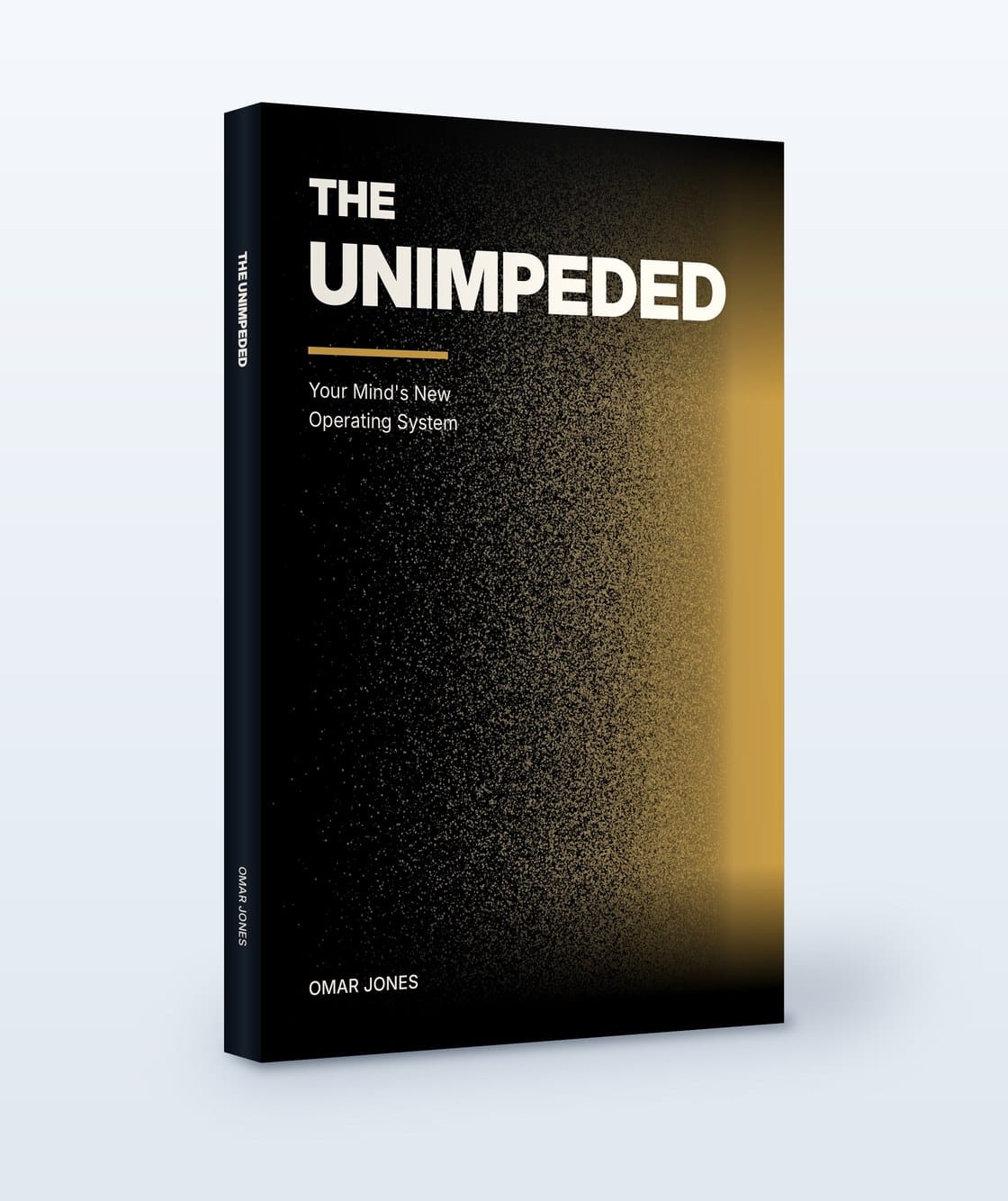
This guide draws on my book The Unimpeded: Your Mind's New Operating System, out now in paperback and hardcover. My first book, Mindset Alchemy, covers the daily practices of a growth mindset.
Rather work on it with me? The Unimpeded program adds live sessions, a small crew and a private 1:1 with me every week. See the program