Limiting Beliefs · Inherited Beliefs
The Pinocchio Effect: Why You Believe What You Were Taught
The Pinocchio Effect is my name for a simple fact: most of what you believe was handed to you before you were old enough to check it. Your ideas about money, work, and who you're allowed to become came from the people who raised you, and they got theirs the same way. When a belief stops matching reality, that isn't a verdict on you. It's a notification that something needs an update.
I put babies on an island.
Not really. It's a thought experiment I run when I catch myself acting on something I never chose. Imagine five infants, alone, with nobody to teach them anything. What language do they speak? What religion do they practice? What do they believe about money, about work, about who deserves what?
You can't answer. Nobody can. Not one of those things grows inside a person. Somebody has to put it there.
Now run it again, and this time I'm on the island. I raise those five kids. For twenty years I give them everything I know. Then I send them out into the world. They walk off that beach carrying my vocabulary, my assumptions, my blind spots, and my bad information. Not one of them knows which part is which. They think it's simply how the world is.
That's exactly how you and I left home.
Where do our beliefs come from?
Mostly from other people. Parents, grandparents, teachers, the block you grew up on, the TV that was on in the background. Psychologists call this socialization. I call it installation, because it happens before you have any way to review what's being installed.
I think of the mind as an operating system. Some of the programs running in yours were written decades before you were born. They came down the line the way my first coat did, already worn by somebody else.
That doesn't make them wrong. A lot of what you were handed is good. Be on time. Take care of your people. Finish what you start. The trouble is that the good programs and the outdated ones arrive in the same box, and nobody labels them.
The Pinocchio Effect, explained
Pinocchio was carved out of wood and worked on strings. Everything he knew came from one man. Geppetto gave him his language, his manners, his sense of right and wrong. Then the strings came off, he walked into the world as a real boy, and his nose started growing.
We read that as punishment. The boy lies, the nose grows, the boy learns.
I read it differently. The nose isn't a punishment. It's a reading. It's the gap between what he's saying and what's actually true, made visible so he can't miss it. He isn't being malicious. He's repeating what he was given by the only person who ever gave him anything, and he's finding out in public that some of it doesn't hold.
So is Pinocchio a liar, or is Pinocchio every one of us?
Before you go looking for someone to blame, finish the story. Where did Geppetto get his information? He was somebody's boy too. Everything he had was handed to him by someone who was handed it by someone else. Nobody in that chain was trying to limit anyone.
That's the Pinocchio Effect. You're running on information you didn't choose, written by people who didn't choose theirs either.
What an inherited belief looks like up close
I grew up in Englewood, on Chicago's South Side. At fifteen I decided I was done ditching school. I got there an hour early, ate breakfast alone, and at 7:58 I was at my locker getting my books.
A counselor told me I couldn't be at my locker until eight. It escalated. Security walked me to her office. My mother came, sat next to me, and asked what I wanted to do.
I told her I was done. I didn't go back.
For about thirty years I told that as a story about a counselor. She was wrong. But she didn't make me leave. My menu was only two items long: comply or leave. Where I grew up, that menu made sense. Authority was arbitrary and appeals went nowhere. I just didn't know it was a local rule. I thought it was how the world worked.
A year later it ran again. A manager at White Castle named Brian told me to clean a bathroom he'd just walked out of. I refused, he sent me home, and on my way out he yelled that I'd never work in this town again.
I went home and believed him.
Three days later Lena, one of the general managers above him, called. She said, "Omar, Brian doesn't have that kind of power."
That's the whole mechanism. Somebody hands you information. It comes with the weight of their position, and you have no reason to check it. You carry it, act on it, and it costs you. And all it ever was is something a person said on a bad day.
The nose is a notification
Here's the part I want you to keep. When a belief you carry runs into reality and loses, that moment feels like failure. It isn't. It's the system telling you where the gap is.
The problem with Pinocchio's nose is the setting. It grows in public, at the worst possible moment. You don't have to wait for that. You can check your beliefs before reality checks them for you.
One honest note. I'm not a psychologist, and this isn't a research paper. A lot of the self-improvement world leans on growth mindset research, and that research has been debated since about 2018. Larger studies found smaller effects than the early claims. So I treat these as tools you test on your own life, not guarantees. If you want the step-by-step version for one specific belief, I wrote it up in How to Change a Limiting Belief.
How to question an inherited belief: 4 questions
When the feeling comes back, I run the Pinocchio Effect. It takes about ninety seconds. I've done it in parking lots, in bathrooms before meetings, and once in the back of a car on the way to a conference where I was about to speak.
- Where did this belief come from? Not whether it's true. Where it came from. My feeling that I didn't belong in a room full of people with degrees was installed by people who also didn't have degrees, and who had been told their whole lives what that meant.
- Is the person who gave it to me living the life I want? This is the one that does the work. Usually the answer is no. Usually they were doing their best with what they'd been handed. That's Geppetto. You don't have to keep running their software just because they couldn't afford better.
- Is it based on truth, or on fear and limitation? Some inherited beliefs hold up. Keep those. The ones built on fear usually show up as rules with no reason attached.
- What's the third option I can't see? When you're sure you only have two choices, assume you're wrong and go find the one you're missing. At sixteen I never thought to go over Brian's head. There is almost always a Lena.
It doesn't make the feeling disappear. It demotes it from a verdict to a notification. If the belief that keeps coming back is "I don't belong here," I go deeper on that in How to Overcome Imposter Syndrome.
Try this today
- Write down three beliefs you hold about money, work, and yourself. Next to each, write the name of the person you first heard it from.
- Put one of them on the island. Would five kids raised by nobody ever arrive at it on their own? If not, it was installed.
- Check your inputs. For one week, notice whose voices you take information from. Ask whether those people are living the life you want.
- Make it a habit. One audit won't do it. If you want a daily prompt, join the free 30-day Growth Mindset Challenge.
What's one belief you're running right now that you never chose?
Frequently asked questions
What is the Pinocchio Effect?
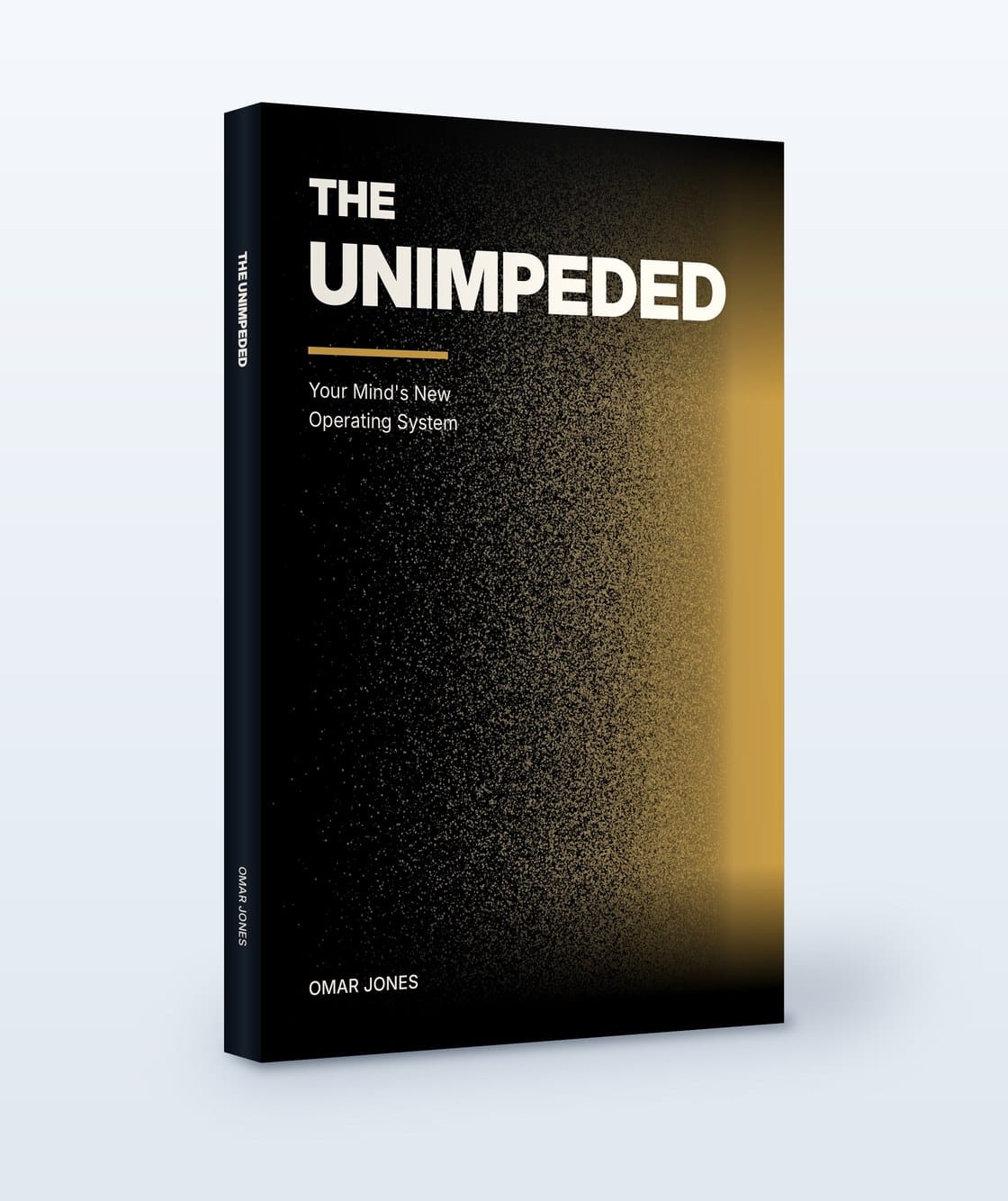
The Pinocchio Effect is a term from my book The Unimpeded. It describes how we run on beliefs we didn't choose, handed down by people who didn't choose theirs either. When one of those beliefs clashes with reality, the "growing nose" is a notification to update it, not proof that you're a bad person.
Where do our beliefs come from?
Most core beliefs come from the people and places that raised us: parents, family, teachers, neighborhood, and culture. We absorb them before we're old enough to question them, so they feel like facts about the world rather than ideas someone gave us.
Are inherited beliefs always bad?
No. Plenty of what you were taught is worth keeping. The point is to check. Ask where a belief came from and whether the person who gave it to you is living the life you want. Keep what holds up and update what doesn't.
How do I change a belief I inherited?
Start by naming it and tracing it to its source. Then test it against what's actually true for you now, and act on the updated version in small ways. For a fuller process, see How to Change a Limiting Belief, and if the belief is about your own ability, How to Stop Self-Doubt.
Free · About 8 minutes
Find out which beliefs you inherited
The free OS Scan finds the one limiting belief that's costing you the most right now, and gives you a personal plan to rewrite it.
This guide draws on my book The Unimpeded: Your Mind's New Operating System, out now in paperback and hardcover. My first book, Mindset Alchemy, covers the daily practices of a growth mindset.
Rather work on it with me? The Unimpeded program adds live sessions, a small crew and a private 1:1 with me every week. See the program